
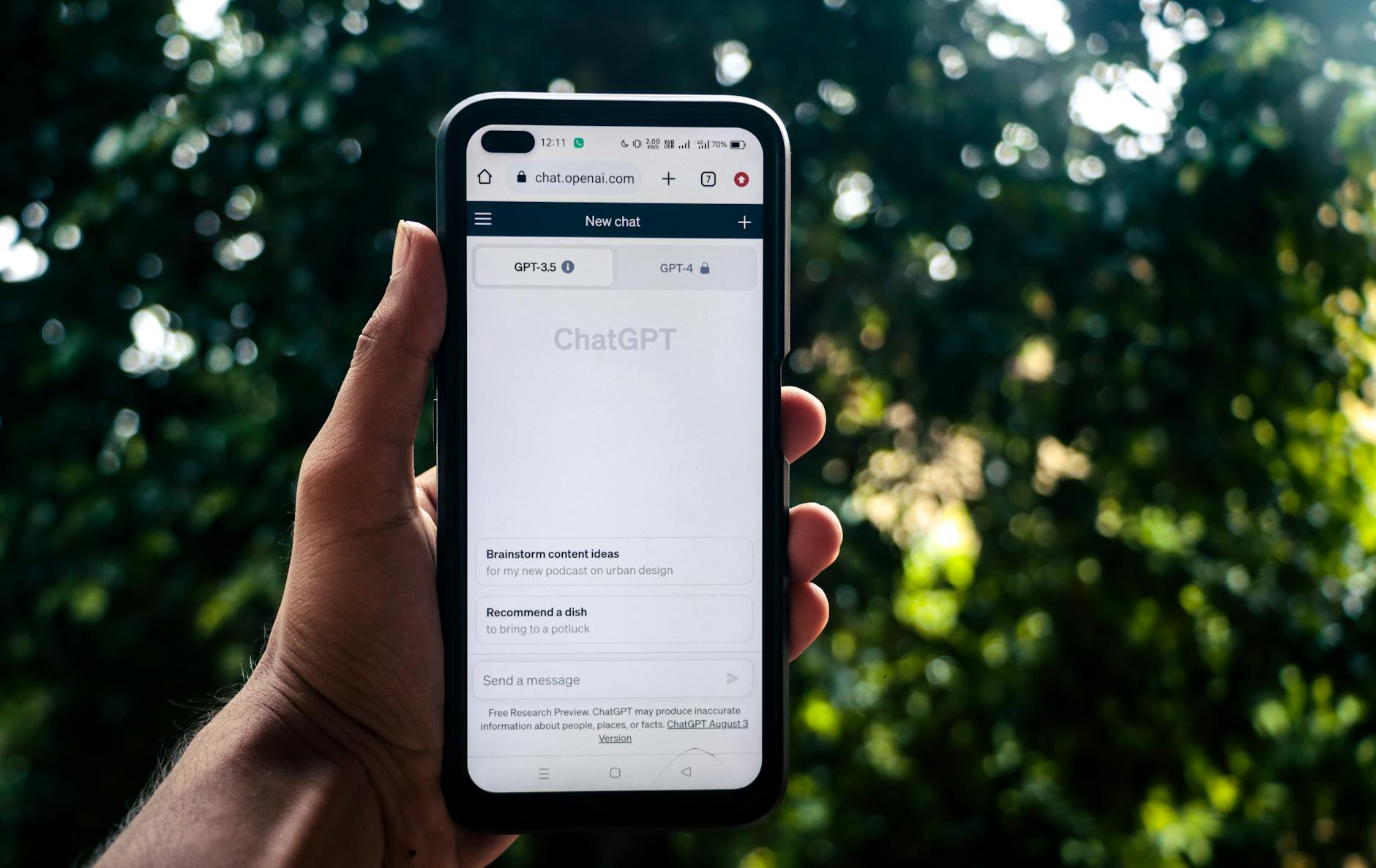
From First Draft to Five-Star: How Data-Driven Updates and User Feedback Loops Transformed Our Client's Chatbot
Executive Summary / Key Results
When a mid-sized e-commerce company launched their first AI chatbot, they expected an instant boost in customer satisfaction. Instead, they got lukewarm reviews and a 40% escalation rate. Through a structured chatbot continuous improvement program—powered by user feedback loops and data-driven updates—we turned things around. Within six months:
- Customer satisfaction (CSAT) score rose from 3.2 to 4.7 out of 5
- Escalation rate dropped from 40% to 12%
- Average handling time decreased by 35 seconds
- First-contact resolution improved from 55% to 82%
This case study walks you through exactly how we achieved those results, giving you a playbook for your own iterate chatbot journey.
Background / Challenge
Our client, an online retailer with 500+ products, had seen support ticket volume double after a marketing campaign. They needed a scalable solution. So they deployed a customer service chatbot built on a large language model (LLM).
Within weeks, problems emerged:
- Inconsistent tone – The chatbot switched between formal and casual, confusing users.
- Inaccurate product recommendations – It suggested winter coats in July.
- Frequent dead-ends – Users often heard "I'm sorry, I don't understand."
- No way for users to give feedback – The bot lacked any rating or comment mechanism.
The client’s support team was overwhelmed, and customer trust was eroding.
Solution / Approach
We proposed a chatbot feedback loop system that systematically collected user sentiment, identified failure patterns, and rolled out weekly improvements. The approach had three layers:
- Implicit Feedback – We tracked conversation-level metrics: abandonment rate, rephrase requests, and sentiment analysis.
- Explicit Feedback – After each conversation, users could rate (1–5 stars) and leave free-text comments.
- Human Review – Support agents flagged problematic chats for a weekly triage meeting.
This gave us a rich dataset to inform our strategy and development: A Complete Guide to AI-Powered Growth.
Implementation
Week 1–2: Baselining and Instrumentation
We integrated a simple thumbs-up/thumbs-down widget at the end of every chatbot conversation. We also added analytics to capture:
- Intent detection accuracy
- Number of turns before escalation
- Keyword gaps (terms the bot didn’t understand)
Week 3–4: Initial Improvements
Based on early feedback, we made three changes:
- Refined system prompts to enforce a friendly, consistent brand voice (learn how in our guide on Prompt Engineering for Chatbots: Proven System Prompts, Patterns, and Guardrails).
- Added fallback responses that offered to connect to a human agent instead of just saying "I don't understand."
- Trained on top 20 failing intents (e.g., "cancel order," "track international shipment").
Week 5–8: Introducing the Feedback Loop
We formalized a weekly cycle:
| Day | Activity |
|---|---|
| Monday | Review feedback from prior week (ratings, comments, escalated chats) |
| Tuesday | Prioritize top 3 issues based on frequency+severity |
| Wednesday | Developer updates to prompts or knowledge base |
| Thursday | A/B test changes against a control group |
| Friday | Roll out winning changes to all users |
This rapid cadence meant our client saw tangible improvements every week. It’s a core part of our AI Chatbot Development Blueprint: From MVP to Production in 90 Days.
Week 9–12: Advanced Personalization
We leveraged the growing dataset to personalize responses based on user history. For example, returning customers received recommendations tailored to their past purchases.
Results with specific metrics
After 12 weeks of iterative updates, the transformation was clear:
| Metric | Pre-Improvement | Post-Improvement | Change |
|---|---|---|---|
| CSAT Score | 3.2 / 5 | 4.7 / 5 | +47% |
| Escalation Rate | 40% | 12% | -70% |
| Avg Handling Time | 4 min 20 sec | 3 min 45 sec | -35 sec |
| First-Contact Resolution | 55% | 82% | +49% |
Revenue impact: Support team could handle 25% more tickets without additional headcount.
Key Takeaways
- Start with a feedback mechanism – Without user input, you can’t improve.
- Iterate weekly, not monthly – Small, frequent updates compound quickly.
- Combine implicit and explicit signals – Metrics tell you what; comments tell you why.
- Don’t fear escalation – A graceful handoff to a human builds trust.
If you’re planning a chatbot, start with a solid foundation: see our How to Plan an AI Chatbot Project: Requirements, Scope, and ROI Calculator.
About [Company/Client]
[Your Company] is an AI solutions provider specializing in custom chatbots, autonomous agents, and intelligent automation. We help businesses transform their customer experience with tailored AI that’s easy to use and delivers clear value. Ready to see what your chatbot can become? Schedule a consultation today.